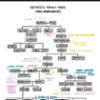
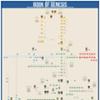
Aram
Shem(셈-노아의 장자)의 계보:
Ham(함)의 계보에 이어 창세기 10장은 Shem의 다섯 아들(Elam, Asshur, Arphaxad, Lud, Aram)에 대해 서술.
Elam(엘람)과 Asshur(앗수르):
첫째와 둘째 아들로, 각각 Elamites(엘람인)와 Assyrians(아시리아인)의 eponym(명칭조상).
Elam은 현대 언어학상 Semitic(셈어족)이 아니지만, 지리적 인접성과 아시리아와의 오랜 전쟁 등
역사적 관계로 인해 성서적 기준의 셈족으로 분류됨. 이들은 창세기 기록 당시 가장 강력한 국가들이었으며, Elam이 더 오래되고 아시리아 정복에 끝까지 저항한 적수였기에 장남으로 기록됨.
Aram(아람)의 등장과 역할:
북아라비아에서 기원전 12세기경 등장한 Aramaean(아람인) 부족 지칭.
이들의 잦은 습격은 강력했던 Assyrian Empire(아시리아 제국)를 약화시켰고, 이후 약 200년간 서아시아에 다른 작은 국가들이 자리 잡을 수 있는 역사적 공백기 제공. 기원전 732년까지 가나안 북쪽에서 독립 왕국을 유지했기에 Shem의 독립적인 아들로 기록될 자격이 충분했음.
Lud(룻): 발음의 유사성으로 보아 소아시아 서부의 Lydia(리디아) 왕국을 가리키는 것으로 추정. 아시리아에 대항해 독립을 유지.
Arphaxad(아르박삿)과 히브리인의 기원:
언어학적으로는 수수께끼인 비셈어 계열의 이름. 그러나 바이블은 Arphaxad를 Eber(에벨)의 할아버지로 명시함. Eber는 Hebrew(히브리인, 즉 이스라엘과 유다 민족)의 명칭조상이므로, 결국 Arphaxad의 계보는 창세기를 직접 편찬한 이스라엘과 유다 왕국의 위치를 셈의 독립적인 후손으로 자리매김하기 위한 장치임.
셈 => Arphaxad => Salah => Eber => 히브리인(Hebrews)
베오
Babel
바벨은 이라크 중부에 있었던 고대 도시 바빌론
언어의 혼란과 건축 중단:
단일 언어를 쓰던 Noah(노아)의 후손들이 Shinar(시날, 수메르)에 모여 하늘에 닿을 거대한 탑을 세우려 함. 그러나 신이 사람들의 언어를 다르게 만들어 소통을 막음으로써 복잡한 건축 작업이 결국 중단됨.
Babel(바벨)의 어원적 오류:
성서 저자들은 도시 이름이 '혼합된', '혼란스러운'을 뜻하는 히브리어 balal(발랄)에서 유래했다고 기록함. 하지만 이는 잘못된 파생(false etymology)임. 실제 바빌로니아어로는 '신의 문'을 뜻하는 Bab-ilu(바빌루)이며, 여기서 히브리어 바벨과 그리스어 Babylon(바빌론)이라는 이름이 탄생함.
역사 속 Ziggurat(지구라트):
실제 바빌론과 수메르의 도시들에는 경사로를 통해 올라가는 계단식 피라미드 형태의 신전인 ziggurat가 존재했음.
미완성 바벨탑의 실제 모델:
과거 한 수메르 왕이 건축을 시작했으나 사르곤 시대의 혼란 등으로 인해 수세기 동안 완성되지 못한 채 방치된 거대한 탑이 있었음. 피사의 사탑이나 슈베르트의 미완성 교향곡처럼 이 '미완성 상태'가 오히려 유명세를 타면서 바이블 속 바벨탑 설화의 모티브가 된 것으로 추정.
탑의 최종 완공:
기원전 6세기경 바빌론의 왕 Nebuchadnezzar(느부갓네살)가 각 행성을 상징하는 7단 구조에 밑변 300피트, 높이 325피트 규모로 이 탑을 마침내 완공함. 이집트 피라미드보다는 작지만 당시 서아시아 최대 규모의 건축물이었으며, 이것이 오늘날 우리가 익히 아는 '바벨탑'의 완성된 모습임.
베오
UR OF THE CHALDEES - 갈대아 우르
Abram(아브람)의 탄생과 묘사:
Flood(대홍수) 이후 점차 수명이 줄어드는 계보 속에서, Terah(데라)의 아들로 태어남. 탄생 연대는 대략 기원전 2100년 혹은 기원전 2000년 직후로 추정되며, 그가 실제 단일 인물인지 여러 인물이 압축(telescoping)된 것인지는 불분명하나 성서 기록은 아브람을 구체적인 개인으로 묘사.
첫 번째 Patriarch(족장)로서의 상징성:
훗날 유대인들이 육체적·영적 기원을 추적하는 최초의 족장. 처음으로 Canaan(가나안)으로 이주했으며, 성서 외 전설에서는 우상을 만드는 아버지 데라를 비판하고 우상을 부순 확고한 monotheist(일신교도)로 등장.
고향 Ur(우르)의 배경:
가문의 고향인 우르는 유프라테스강 우안과 당시 페르시아만 해안에 위치했던 Sumerian(수메르) 도시. 기원전 3500년 이전에 세워져 달의 신 Sin(신)을 섬기고 거대한 ziggurat(지구라트)와 해상 상업으로 번영. **** 현대 영어의 '죄(sin)'와 철자가 같아 오해하기 쉽지만, 이는 고대 메소포타미아 문명에서 달의 신을 일컫던 실제 신의 이름(고유명사)이라 함.
제3왕조와 Nimrod(니므롯) 전설:
과거 우르를 정복했던 정복자(루갈자기시, 사르곤)들의 기억이 유대 전설에서는 아브람을 죽이려 한 바빌로니아 왕 니므롯으로 투영. 실제 아브람은 아카드 제국 멸망 후 우르가 상업적으로 다시 크게 번성했던 '제3왕조'(기원전 2050~1950년) 시기에 태어남.
Chaldees(갈대아) 명칭의 Anachronism(시대착오):
창세기 저자들이 그의 고향을 'Ur of the Chaldees'라 부른 것은 명백한 anachronism.
Chaldeans(갈대아인)는 아브람 시대보다 약 1000년이나 뒤인 기원전 1150년경에야 바빌로니아 남부로 진입한 아라비아 부족. 하지만 창세기가 문서로 기록되던 무렵 우르는 이미 쇠락한 마을이었고, Assyrian(아시리아) 시대에는 갈대아인이 바빌론 인구의 가장 핵심이었음. 따라서 저자들은 독자들에게 이 도시를 가장 경제적으로 식별시키기 위해 시대적 오류를 무릅쓰고 익숙한 명칭을 사용
베오
Haran(하란)
Ur(우르)의 쇠락과 이주 배경:
-Abram(아브람) 청년기 시절 퇴적 작용으로 인한 항구 기능 마비 및 도시 간 갈등으로 우르의 번영 쇠퇴.
-바빌론의 Amorites(아모리인) 세력 확장으로 인한 수메르 도시국가들의 몰락과 아브람 가문의 이주 결정
-Fertile Crescent(비옥한 초승달 지대) 경로: 아라비아 사막 횡단 대신 강을 따라 북서쪽으로 이동해 남하하는 1,000마일 이상의 비옥한 정착지 경로 선택
-이 경로의 북쪽 정점인 하란 체류
하란의 지리적 위치와 달 숭배:
-오늘날 터키 남동부 및 시리아 국경 북쪽의 발리크 강가에 위치한 당시의 주요 commercial center(상업 중심지)
- 고향 우르와 마찬가지로 달의 신인 Sin을 섬기는 신앙적 공통점 존재
아브람의 출생지 논쟁:
-우르 대신 하란을 실제 출생지로 보는 학계 가설 존재
-이 가설에 따르면 아브람은 수메르인이 아닌 Aramaean(아람인)이 되며, 이는 신명기의 "방랑하는 아람인" 구절과 부합
- 동생 하란의 이름은 히브리어 발음 차이로 인해 하란 도시 이름과 무관
*다만 우르 출생 전승이 매우 확고하며, 이주민들이 Canaan(가나안)으로 이동할 때 수메르의 대홍수 설화 및 에덴동산, 바벨탑 전설 등을 전파했을 가능성
역사적 전투의 격전지: 아시리아 제국의 마지막 보루이자 군대의 최후 패망지 :
로마인들에게 Carrhae(카레)로 불린 곳으로, 기원전 53년 Crassus(크라수스)의 로마군이 Parthians(파르티아인)에게 참패하고 서기 296년에는 황제 Galerius(갈레리우스)가 Persians(페르시아인)에게 패배한 역사적 격전지
베오
Canaan(가나안)
가나안의 지리적 위치와 지명 유래:
Asia Minor(소아시아) 남쪽에 위치한 Mediterranean(지중해) 연안 아시아 지역 지칭.
기원전 1800년경의 Egyptian inscriptions(이집트 비문)에서 최초 해당 의미로 사용된 기록 발견.
가나안의 역사적 문명 발전:
기원전 4000년경 이미 뚜렷한 도시들을 갖춘 후기 Stone Age(석기 시대) 문명의 중심지 형성.
기원전 3200년경 금속 가공 도입 및 Bronze Age(청동기 시대) 진입.
Semitic language(셈어) 인구의 유입:
기원전 3000년경부터 셈어 사용자들이 가나안 지역으로 유입됨.
이후 약 천 년 동안 Tigris-Euphrates(티그리스-유프라테스) 지역의 발전된 문화적 영향력 및 지속적인 이주민 유입으로 혜택을 입음.
Abram(아브람) 도착 시점에는 이미 오랜 역사를 지닌 civilization(문명) 국가였으며, 성경에서 Canaanites(가나안 사람들)로 통칭하는 다양한 혼합 민족들이 거주 중인 상태.
이집트 지배와 언어적 실제:
성경은 Egypt(이집트)의 지배 영향력을 근거로 가나안을 함의 아들로 묘사하였으나, 실제 가나안인 대부분은 셈어 계열인 Hebrew(히브리어)를 구사함.
Israelites(이스라엘인)의 가나안 정복과 종교적 의의:
훗날 가나안 땅을 정복한 이스라엘인들은 피정복민의 언어를 채택하여 사용함.
그러나 언어적 동화와 달리 종교적 측면에서는 자신들만의 고유한 religious values(종교적 가치)를 세우고 끝까지 수호함.
이러한 종교적 독창성과 고수가 역사 속 이스라엘이 지닌 진정한 중요성의 본질.
베오
Egypt(이집트, 애굽)
Famine기근과 나일강의 풍요로움:
Canaan 땅에 기근이 들었을 때 Abram이 남서쪽 Egypt로 이주한 것은 자연스러운 선택. 매년 발생하는 Nile강의 범람 덕분에 기근의 영향을 받지 않는 비옥함 유지.
초기 문명의 발상지와 지리적 이점:
Sumeria와 더불어 인류 문명의 가장 오래된 발상지. 사막과 바다로 둘러싸인 고립된 지리적 위치 덕분에 외세의 침략 없이 비교적 평화롭게 독자적인 culture 발전.
지형적 특징과 분열:
나일강 양안의 좁고 긴 형태로 인해 자연스럽게 isolated fragments(고립된 파편)로 분열하기 쉬운 구조. 기원전 4천년기 말에 삼각주 지역인 Lower Egypt와 남쪽의 Upper Egypt로 고착.
통일 왕조의 성립:
기원전 3100년경 상이집트의 통치자 Menes(메네스)가 두 지역을 통합하고 접경지인 Memphis(멤피스)에 capital 건설. united Egypt(통일 이집트)의 제1왕조를 개창하였으며 이후 30개의 dynasty 지속.
Old Kingdom(고왕국) 시대와 피라미드:
기원전 2664~2181년경 제3~6왕조 시기에 고왕국 번영.
Zoser(조세르) 왕 때 최초의 pyramid 건설. 사후 세계와 육체 보존을 중시하는 death-centered 종교관에 따라 도굴을 막고 미라를 보존하기 위한 거대 무덤 용도로 축조.
제4왕조 Khufu(쿠푸) 왕 시절 축조된 Great Pyramid(대피라미드)는 인류 역사상 가장 야심 차고 무익한 프로젝트.
무정부 상태와 Middle Kingdom(중왕국)의 시작:
제6왕조 이후 중앙 집권력 약화와 봉건 영주들의 발흥으로 분열 및 anarchy 도래.
기원전 1991년경 제12왕조의 Amenemhet 1세(아멘엠헤트 1세)에 의해 중왕국 시대가 개막되며 찬란한 문명 재건. 이 시기가 Abram(아브람)이 이집트에 들어간 역사적 배경.
베오
PHARAOH - 파라오 (바로)
Pharaoh(파라오) 칭호의 의미와 유래:
이집트 통치자를 존칭하는 표현으로, '큰 집'을 뜻하는 이집트어 pero(페로)에서 유래. 이는 미국 대통령을 White House, 소련 지배 기구를 Kremlin이라 부르는 표현 방식과 유사.
역사적 특정의 한계:
인명 대신 Pharaoh를 일관되게 사용하여 성경 속 인물이 구체적으로 어느 왕인지 식별 불가능. Abram(아브람)의 아내를 하렘에 들이려 했던 왕이 정확히 누구인지는 추측만 가능.
Sesostris I(세소스트리스 1세) 가설:
아시모프는 해당 왕을 기원전 1971~1928년 동안 이집트를 통치한 제12왕조의 두 번째 왕인 Sesostris 1세라고 추정함. 영토를 남서쪽으로 확장하고 번영을 이끌었던 군주로, 방랑하는 Aramaean(아람인)에게 매우 매력적인 정착지였을 배경.
이집트 퇴거와 자산 획득: 파라오와의 갈등 및 아내를 돌려받는 과정에서 상당한 불쾌감을 겪은 후 Canaan 복귀를 결심. 비록 곤경을 치렀으나 결국 이집트에서 많은 재물을 얻어 rich man 상태로 돌아감.
베오
Jordan River 요단강 요르단강
Great Rift Valley(지구대)와 해수면 아래의 경로
해수면보다 낮은 강: 강 하류 2/3 구간은 전 세계 다른 강들과 달리 해수면보다 낮은 위치에서 흐르는 기이한 특징 보유.
지형적 배경: 요단강이 홍해를 지나 동아프리카까지 약 4,000마일 동안 이어지는 거대한 지구대의 북쪽 끝자락에 위치하기 때문.
강의 실제 환경적 한계
실제 환경: 배가 다닐 수 없고, 여름에는 그늘에서도 기온이 110도에 달해 실제로는 매우 덥고 황량한 환경.
창세기의 설명: 롯의 요단강 유역에 대한 긍정적 평가는 소돔과 고모라가 황폐화되기 전의 풍요로웠던 일시적 상태였음을 명시.
현대 영토 경계와 분쟁의 역사
국경선 역할: 제1차 세계대전 이후 영국 관할 하의 팔레스타인과 트랜스요르단의 동쪽 경계선 역할 수행.
영토 분쟁: 1948년 이스라엘 독립 선언과 전쟁 발발 후, 트랜스요르단은 강 서쪽 영토(West Bank)를 합병하며 국명을 요르단으로 변경했으나, 1967년 6일 전쟁 이후 이스라엘이 이 서안 지구를 점령
베오
Hebron 헤브론
After Lot left, Abraham contented himself with the less fertile and apparently less desirable region southwest of the Jordan.
Genesis 13:18. Then Abram removed his tent, and came and dwelt in the plain of Mamre, which is in Hebron...
Actually, “plain of Mamre” is a mistranslation and, in the Revised Standard Version, it is “oaks of Mamre” with a footnote to the effect that it might be “terebinths of Mamre.” In either case, the reference is, apparently, to a sacred grove of trees located (according to tradition) about two miles north of Hebron.
Hebron itself is twenty miles south of Jerusalem and is one of the oldest towns in Canaan. Although it is called Hebron here, that being its name at the time Genesis was placed in final form, it was apparently called Kirjath-arba in Canaanite times (as stated later in Genesis 23:2
Genesis 23:2. . . . Kirjath-arba; the same is Hebron...
Hebron still exists and has a population of about twenty-five thousand. Its Arabic name is “El-Khalil” (“the friend”) in honor of Abraham, “the friend of God.” Various ancient oaks in its vicinity are pointed out as the “oaks of Mamre” but it is not possible that any of them are really four thousand years old.
베오
Hebron(헤브론)
Hebron 정착: Lot이 떠난 후, Abraham은 요단 남서쪽의 덜 비옥한 지역으로 이동하여 Mamre(마므레) 평원에 거주.
마므레 평원의 오역: "plain of Mamre"는 오역이며, RSV에서는 이를 "oaks of Mamre"(혹은 terebinths)로 수정 번역. 이는 실제 헤브론 북쪽 약 2마일에 위치했던 성스러운 나무숲을 지칭하는 것으로 추정.
지리적 위치와 역사: Jerusalem(예루살렘) 남쪽 20마일에 위치한 가나안 최고의 고대 도시 중 하나. 창세기가 최종 편집될 당시의 이름인 헤브론으로 기록되었으나, 가나안 시대 본래 이름인 Kirjath-arba에서 후대에 명칭 변경.
현대적 상태와 El-Khalil(엘 카릴) 지명: 현재도 약 2만 5천 명의 인구가 거주 중인 도시. "신의 친구"인 Abraham을 기리기 위해 아랍어로는 "El-Khalil"로 명명. 인근의 여러 고목들이 "oaks of Mamre"로 소개되나, 실제 수령이 4000년에 달할 가능성은 전무.
베오
Amraphel 아므라벨
After the separation of Abraham and Lot, the “cities of the plain” with which Lot had cast his lot were subjected to invasion by armies from the east. The heads of the invading force are named:
Genesis 14:1... . Amraphel king of Shinar, Arioch king of Ellasar, Chedorlaomer king of Elam, and Tidal king of nations;
This seems to picture the situation as it existed in the days of the final decay of Sumeria, Elam, the constant enemy of Sumeria (see page 35) now has the upper hand. It had been conquered by Sargon of Agade and for centuries had remained more or less under Sumero-Akkadian rule. After Ur’s final gasp of power had faded away, however, Elam moved in.
In fact, Elamite onslaughts may have helped bring Ur to final ruin. (I would like to imagine that the news of this reached Abram in Haran or Canaan. If so, it might have seemed as though Cain were slaying Abel at last—see page 34—and helped fix that legend in the mind of those who traced their descent from Ur.)
Ellasar may well be the city referred to in Babylonian records as Larsa. This was a city on the Euphrates about twenty miles upstream from Ur. Ur's decline meant its temporary rise. Tidal is sometimes identified with Tudhaliya I, the ruler of some Hittite tribe. (I will have more to say about the Hittites later.)
베오
동방 연합군의 침공: 아브라함과 롯의 결별 후, 롯이 정착한 평원 도시들을 향해 동방 세력이 가한 침공 사건.
침략군 영수들의 명단: 창세기 14장 1절에 기록된 시날의 왕 Amraphel(아므라벨), 엘라살의 왕 아리오크, 엘람의 왕 그돌라오멜, 여러 부족의 왕인 디달의 등장.
수메르의 몰락과 엘람의 득세: 수메르 문명 말기의 역사적 상황 투영. 과거 아카드의 사르곤 왕에게 지배받던 엘람이 우르의 세력 약화를 틈타 패권을 장악한 현실 반영.
우르의 파멸과 형제 살해 전설의 연결: 엘람의 침략으로 인한 우르의 최종 몰락. 이 소식을 가나안이나 하란에서 들은 아브람이 '카인이 아벨을 죽인 전설'을 연상하고 이를 후손들의 기억에 각인시켰을 것이라는 저자의 문학적 유추.
주요 거점 및 인물 비정:
엘라살은 우르 상류 약 20마일 지점의 유프라테스 강변 도시 라르사로 비정되며, 우르의 쇠락을 기회로 얻은 일시적 번영.
디달은 히타이트 부족의 통치자 투드할리야 1세로 추정.
베오
아므라벨 계속
The ruler mentioned in this verse who has received the lion’s share of attention from Biblical scholars is, however, Amraphel king of Shinar. At this time—about 1900 3.c.—the Amorites (see page 50) had taken over Babylon. Eventually, they were to take over all of Sumeria, so that Amraphel, possibly a local ruler and no more, is already called,
a little prematurely, the king of Shinar.
The greatest ruler of the Amorite line was, as I have said earlier, Hammurabi, who ruled about 1700 3B.c. and is best known for the code of laws issued in his reign. A copy was discovered in modem times on a diorite stele eight feet high. Hammurabi eventually conquered Larsa, which, under its powerful king Rim-Sin, had made things
hot for him for a while. He also conquered Elam. (Nevertheless, Elam had its recurrent periods of power later. The column on which the code of Hammurabi was inscribed was found in Susa, the Elamite capital, where it may have been taken after a successful Elamite raid on Babylon during one of the periods of weakness of the latter city.)
It has long been customary to say that Amraphel was Hammurabi, but this seems quite out of the question. Hammurabi reigned some centuries after the events of this chapter of Genesis must have taken place. The Biblical story has Chedorlaomer of Elam the leading element of the coalition (even though Amraphel is mentioned first in 14:1) and this would be unthinkable in Hammurabi’s reign.
The picture, then, is of a Sumeria on the decline, with Babylon and Larsa acting as a pair of city-states under the domination of Elam, with whom some Hittite elements are allied (or are perhaps serving as mercenaries).
Apparently, Elam, having secured the Tigris-Euphrates, is now reaching westward for the rest of the Fertile Crescent, which for some centuries has been under the domination of whatever power had ruled in the east.
베오
Amraphel의 실제 위상: 기원전 1900년경 Amorites(아모리인)가 Babylon(바빌론)을 차지함. 아므라벨은 당시 일개 지방 통치자에 불과했으나 성서 저자들이 조금 이르게 그를 'Shinar(시날, 수메르)의 왕'으로 호칭함.
Hammurabi(함무라비) 동일시 가설의 오류:
전통적으로 아므라벨을 기원전 1700년경 법전으로 명성을 떨친 바빌론의 위대한 왕 함무라비와 동일 인물로 보았으나, 이는 시대적으로 성립 불가능함.
함무라비는 창세기 14장의 사건보다 수 세기 뒤에 통치한 인물임. 또한 성경은 Elam(엘람)의 왕 Chedorlaomer(그돌라오멜)를 연합군의 실질적 맹주로 묘사하는데, 이는 엘람을 정복했던 강력한 함무라비 치세 하에서는 상상할 수 없는 구도임.
당시 메소포타미아의 정세:
쇠퇴기에 접어든 수메르 지역에서 바빌론과 Larsa(라르사)가 도시국가로서 엘람의 지배를 받던 역사적 상황 투영.
티그리스-유프라테스 유역을 확보한 엘람이 일부 Hittite(히타이트) 세력과 연합하여 비옥한 초승달 지대의 서쪽 연안으로 세력을 확장하려던 정황을 보여줌.
베오
THE VALE OF SIDDIM - 싯딤 골짜기
Against the invaders stood the forces of what were then the most populous and prosperous cities of Canaan, the five “cities of the plain”: Sodom, Gomorrah, Admah, Zeboiim, and Zoar, concerning which there will be more to say later.
Apparently, they had paid tribute for twelve years but now they refused further payment and prepared to resist.
Genesis 14:3. All these were joined together in the vale of Siddim, which is the salt sea.
The “salt sea” is the inland sea into which the Jordan empties and a most unusual body of water it is. It is not large in size, only about forty-seven miles long and not more than ten miles wide. Its area is 370 square miles, which makes it only slightly larger than the five boroughs of New York City.
The descending Jordan River is at 1286 feet below sea level when it finally enters the “salt sea,” the shores of which are thus lower than any other land area in the world.
If the depression in which the salt sea rests could be filled to sea level, it would form a much larger inland sea some two hundred miles long and twenty miles wide, almost as large as the state of Connecticut.
The reason why the salt sea does not fill the depression is simple.
The amount of water it receives—that of the Jordan River carrying to it the rainfall upon the mountains in southern Syria and Lebanon— is small. Its temperature is high (readings of up to 140° F. are recorded in its neighborhood) and the loss of water by evaporation is high.
The salt sea represents a puddle, so to speak, which has partly dried.
The water brought in by the Jordan River is fresh but it does contain small amounts of chemicals dissolved from the soil it passes over and the banks it passes between. These chemicals accumulate in the salt sea. If the salt sea had an opening to the ocean the chemicals would be washed out as fast as they came in and the waters of the sea would remain fresh. But there is no opening and the sea loses water only by evaporation. The chemicals do not evaporate and remain behind; more is constantly being added and none is removed. As a result, the sea is now from 23 to 25 per cent dissolved chemicals, mostly sodium chloride (common salt) and magnesium chloride, plus smaller quantities of a variety of other substances. It is rightly named
the salt sea.
베오
평원의 다섯 도시 연합과 저항: 동방의 침략자들에 맞서 당시 가나안(Canaan)에서 가장 인구가 많고 번성했던 평원의 다섯 도시인 Sodom(소돔), Gomorrah(고모라), Admah(아드마), Zeboiim(스보임), Zoar(소알) 연합군이 결성됨. 이들은 12년간 조공을 바치다 거부하고 저항을 준비함.
Siddim(싯딤) 골짜기와 Salt Sea(염해)의 지리적 특징: 연합군이 집결한 싯딤 골짜기는 요단강(Jordan River)이 흘러드는 염해를 의미하며, 길이 약 47마일, 폭 10마일 이하, 총면적 370제곱마일로 New York City(뉴욕시)의 5개 자치구보다 약간 더 큰 크기를 나타냄.
해수면보다 극도로 낮은 고도: 요단강이 최종 유입되는 염해의 해안가는 해수면 기준 지하 1,286피트 아래에 위치하여 전 세계 육지 중 가장 낮은 고도를 기록함. 만약 이 지구대가 해수면 높이까지 물로 채워진다면 Connecticut(코네티컷)주 크기만한 거대한 내륙해가 형성되었을 것임.
높은 증발률에 따른 수량 제한: 강에서 공급되는 수량은 레바논과 시리아 남부 산맥의 강우량에 의존하여 매우 적은 반면, 주변 온도가 화씨 140도에 달할 정도로 극심하여 수분 증발량이 매우 높음. 이로 인해 저지대가 물로 다 채워지지 못하고 마치 반쯤 말라붙은 거대한 웅덩이 형태를 유지함.
화학 물질의 축적과 염해의 형성: 요단강의 물은 담수이지만 흐르는 동안 씻어내린 소량의 화학 물질이 출구가 없는 내륙해에 지속적으로 축적됨. 오직 증발을 통해서만 수분이 손실되고 화학 물질은 그대로 체류하기 때문에, 현재 염해는 sodium chloride(염화나트륨)와 염화마그네슘을 포함한 화학 물질 농도가 23~25%에 달해 '염해'라는 이름에 완전히 부합하게 됨.
베오
싯딤 골짜기 계속
So heavy is the salt concentration (seven times that of the ocean) that nothing can live in the waters of the sea. For that reason, the Greek geographers took to calling it the Dead Sea, and it is by that name that it is best known to us. The name Dead Sea does not, however, occur in the Bible.
Despite the fact that the Dead Sea is a partly dried puddle resting at the bottom of a depression, we must not get the idea that it is almost all gone and that another little push will cause it to disappear altogether in a final burst of evaporation. Remember that the water of the Dead Sea fills part of the Great Rift Valley. This allows the
Dead Sea, low though its level has fallen, to be one of the deepest lakes in the world. Its average depth is 1080 feet and its greatest depth is 1310 feet. The volume of water it contains is considerably greater than that in some apparently much larger lakes (in terms of surface area) which are very shallow. The Dead Sea contains about twelve times as much water, for instance, as does our own Great Salt Lake, although the latter, in terms of area, is four times as large.
The Dead Sea is a major source of chemicals and indeed plants now exist in its neighborhood for the extraction of potassium chloride from its waters. Chemicals that kill life in too great a concentration can act as fertilizers in proper dosage. Nowadays, the Dead Sea lies between the nations of Jordan and Israel.
The Dead Sea is divided into two unequal parts by a small peninsula that extends into it from the eastern shore. The northern part, making up about two thirds of the whole area, is the deep portion. The southern part, making up the remaining third, is quite shallow, with depths of from three to thirty feet. It is possible that the “vale of Siddim” mentioned in Genesis 14:3 refers to the neighborhood of this southern portion of the Dead Sea particularly.
베오
사해 명칭의 유래: 극도로 높은 salt concentration(염분 농도)(대양의 7배)로 인해 어떤 생물도 살 수 없어, 그리스 지리학자들이 Dead Sea(사해)로 부르기 시작함. 단, 이 명칭은 바이블 본문에는 등장하지 않음.
깊은 수심과 엄청난 수량: 증발로 사라져 버릴 웅덩이가 아니라 Great Rift Valley(대지구대)의 일부를 채우고 있는 깊은 호수임. 평균 수심 1,080피트, 최대 수심 1,310피트에 달해, 표면적이 4배 더 넓은 미국의 Great Salt Lake(그레이트솔트호)보다 수량이 약 12배 더 많음.
화학 물질의 주요 원천: 고농도에서는 생명에 해롭지만 비료로 사용 가능한 potassium chloride(염화칼륨) 등을 추출하는 화학 공장들이 인근에 가동 중임. 현재 사해는 요르단과 이스라엘 영토 사이에 위치함.
지형적 분할과 싯딤 골짜기: 동쪽 해안에서 뻗어 나온 반도에 의해 남북 두 부분으로 나뉨. 깊은 수심의 북쪽 구역이 전체 면적의 3분의 2를 차지하며, 나머지 3분의 1에 해당하는 남쪽 구역은 수심이 3~30피트로 매우 얕음. 창세기 14장 3절의 vale of Siddim(싯딤 골짜기)은 특히 이 남쪽 유역을 지칭할 가능성이 높음.
베오
REPHAIMS - 르바임 족속 (거인족)
The army of Chedorlaomer, on its way down the western half of the Fertile Crescent, quickly subdued the regions east and south of the Dead Sea:
Genesis 14:5. . . . Chedorlaomer, and the kings that were with him, . . . smote the Rephaims ... and the Zuzims . . . and the Emims ...
The use of the expression “Rephaims,” by the way, is an example of a false plural. The “-im” suffix is itself the Hebrew plural, and to add a further “-s” is superfluous. The Revised Standard Version speaks, therefore, of the Rephaim, Zuzim, and Emim. (The Zuzim are often identified with the “Zamzummim” mentioned later in the Book of
Deuteronomy.)
These people predated those who arrived six or seven centuries after the time of Abraham—the Israelites and related tribes. The tradition is strong that the pre-Israelite inhabitants of Canaan, the Rephaim in particular, were giants. Indeed, the tradition of the one-time existence of giants, with sizes that are magnified as the tales are passed on from generation to generation, are very common in the folklore of all nations. The Bible states flatly in one much-discussed passage:
Genesis 6:4. There were giants.in the earth in those days ...
However, the Hebrew term here translated as “giants” is Nephilim and there is no way of being certain that giants is what is actually meant. It may simply have meant a race of mighty warriors, without particular reference to gigantic physical size. The Revised Standard Version evades the issue by leaving the Hebrew word untranslated and
saying “The Nephilim were on the earth in those days.”
Again in the Book of Numbers, in retailing the report of the spies sent into Canaan by Moses, the Bible has them say:
Numbers 13:33. And there we saw the giants, the sons of Anak, which come of the giants .
Here also the term is Nephilim and the Revised Standard Version reads:
“And there we saw the Nephilim (the sons of Anak, who come from the Nephilim) . . .”
[웰다잉 오디세이 2026] 7. 어떻게 죽을 것인가[웰다잉 오디세이 2026] 6. 잘못은 우리 별에 있어
[웰다잉 오디세이 2026] 5. 죽은 다음
천천히 읽어요
세계문학전집 느리게 읽기 (1) 브람스를 좋아하세요...[함께 읽는 과학도서] 천천히 곱씹으며 느리게 읽기 <지구의 짧은 역사> 3부
안 노란 책을 찾아라!
안노란 책 리뷰 <지금, 그리고 그때>안노란책 리뷰 <슬픔의 물리학> 게오르기 고스포디노프안노란 책 리뷰 <영원히 계속되다가 끝이 난다 > 앤 드 마르켄안노란 책 리뷰 <메데이아> 에우리페데스안노란 책 리뷰 <죽은 이는 모두 날아오른다> 요하임 마이어호프
새벽엔 느낌 좋은 소설로 하루 시작해요
[느낌 좋은 소설 읽기] 3. 아쿠아리움이 문을 닫으면[느낌 좋은 소설 읽기] 2. 오버스토리
[느낌 좋은 소설 읽기] 1. 모나의 눈
아티초크의 멋진 책!
[아티초크/책증정] 세계 여성 시인선 100『슬픔에게 언어를 주자』와 함께해요.[아티초크/시집증정] 감동보장! 가브리엘라 미스트랄 & 아틸라 요제프 시집과 함께해요.[아티초크/책증정] 구병모 강력 추천! W.G. 제발트 『기억의 유령』 번역가와 함께해요.
‘인생 록 음악’ 추천!
[그믐밤] 49. 국제 암석의 날 기념, ‘인생 록 음악’ 추천해주세요[김영사/책증정] 대화도 음악이 된다! <내일 음악이 사라진다면> 함께 읽어요[그믐밤] 33. 나를 기록하는 인터뷰 <음악으로 자유로워지다>
새폴스키의 책을 읽습니다
[책걸상 '벽돌 책' 함께 읽기] #36. <모든 것은 결정되어 있다>[책걸상 '벽돌 책' 함께 읽기] #18. <행동>
동구권 SF 함께 읽어요!
[함께 읽는 SF소설] 12.신이 되기는 어렵다 - 스트루가츠키 형제[함께 읽는 SF소설] 11.노변의 피크닉 - 스트루가츠키 형제
🎁 여러분의 활발한 독서 생활을 응원하며 그믐이 선물을 드려요.
[인생책 5문 5답] , [싱글 챌린지] 완수자에게 선물을 드립니다
이기원 단장과 함께 스토리의 비밀, 파헤칩니다
스토리탐험단 시즌2 : 장르의 해부학 1. 호러스토리탐험단 시즌2 : 장르의 해부학 2. 액션 + 로버트 맥키의 액션스토리 탐험단 시즌 2 : 장르의 해부학 읽기 3. 신화 4. 회고록과 성장물
소설로 읽는 기후위기·인류세
[소설로 읽는 기후위기·인류세 - 우리는 왜·어떤 다른 세상을 꿈꾸는가?] - 4회차[소설로 읽는 기후위기·인류세] - (3) 프랑켄슈타인[소설로 읽는 기후위기·인류세] 2회차 『로빈슨 크루소』(다니엘 디포, 1719)[소설로 읽는 기후위기・인류세 - 우리는 왜·어떤 다른 세상을 꿈꾸는가?] 1회차-마션
히어로와 함께
카라마조프의 피도스토옙스키와 29일을[그믐연뮤번개] 3. [독서x관극x모임지기 토크] 우리 몸에 살고 있는 까라마조프를 만나다슬기로운 과학자의 여정
3권의 책 종류
『육식의 종말』완독 하기! (책 증정)[김영사/책 증정] 장안의 화제! 노화과학을 다룬 <우리는 왜 죽는가>를 함께 읽어요 [인플루엔셜/책증정] 진정한 앎은 무엇인가? <지식의 탄생> 읽고 함께 이야기해요!
청명하다, 꾸준히 읽는 중
독서기록용_웍과 칼독서기록용_필요의 탄생독서기록용_제자리에 있다는 것독서 기록용_유성기의 시대, 유행시인의 탄생
<인간의 대지> 오랜만에 혼자 읽기 『에도로 가는 길』혼자 읽기천국의 열쇠 혼자 읽기거실의 사자 : 고양이는 어떻게 인간을 길들이고 세계를 정복했을까
부커상을 받았어요
[책증정][1938 타이완 여행기]
12월 18일 오후 8시 라이브채팅 예정! [이 계절의 소설_봄] 『벵크하임 남작의 귀향』 함께 읽기[Re:Fresh] 3. 『채식주의자』 다시 읽어요.[서울국제작가축제X비채] 버나딘 에바리스토의 <소녀, 여자, 다른 사람들> 함께읽기 챌린지